Tuesday, March 27, 2012

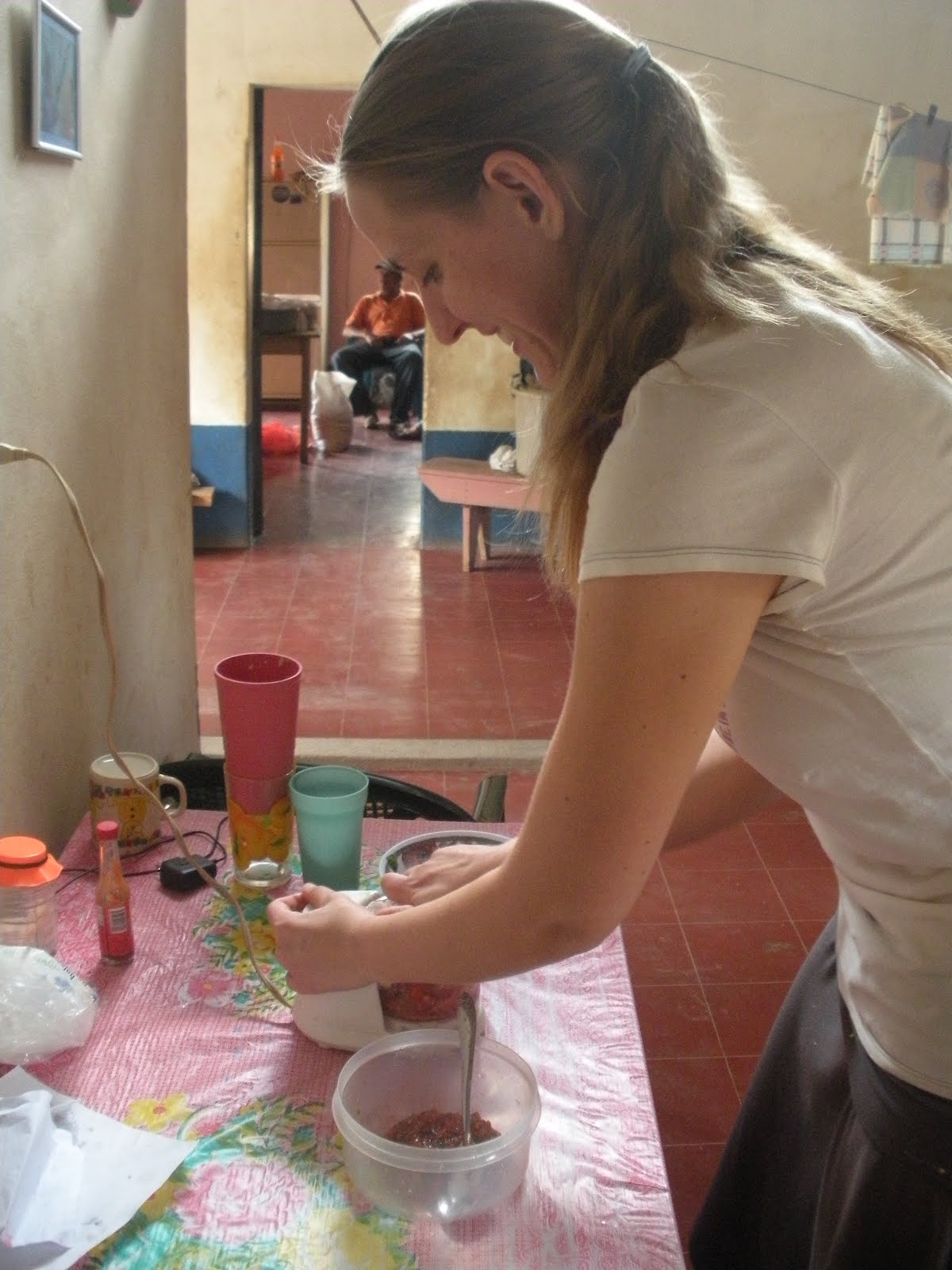
el nacatamal, por fin

A photo post, as I am short on time. Enjoy!


Thursday, March 15, 2012

derp

I promised an update today but my camera has decided to run out of batteries at the internet cafe... foiled!

Stay tuned this weekend for photos and the recipe for some pretty baller nacatamales. (Secret ingredient for added extra deliciousness? Lard, of course!)

Tuesday, January 17, 2012

Things I am still too proud to admit...

The amount of time it took for me to realize that the cobrador isn't shouting allez! to the bus driver as a signal to go.

Da le. Da le. Oh, the world suddenly makes so much more sense.

...Somewhere, I will always be that kid writing the French days of the week on their Spanish quiz, happily oblivious to the fact that it doesn't look quite right.


(New Year's Resolution: Rehabilitate this blog. Perhaps... two posts every six months?)

Saturday, July 9, 2011

bank adventures (written June 16)

Last week I went to the bank.

It’s not the first time I’ve been to the bank, of course, but usually I only go to the ATM outside; surprisingly, I don’t care to stand in the long Saturday morning lines of people waiting to cash in their paycheck. But last week I wasn’t taking the equivalent of a few dollars out of my own tiny account: we were withdrawing a significant amount of the USAID funds we had received to finish the community-based birthing center we started planning last August. More money, more problems, and less chance that the ATM would have what we needed; my counterpart and I decided to stand in line inside the bank and wait for a teller.

Going to the bank here is different than going to a bank in the States. In some ways it’s the same—air conditioning, a blue water bubbler with plastic cups, potted plants which look too shiny to have anything resembling real chlorophyll, the peculiar inky smell of paper bills—but in the US I’ve never been patted down before being allowed entrance to my local bank, nor have two security guards armed with semi-automatics looked through my purse to make sure I’m not carrying anything untoward. (The stack of condom-promotion pamphlets left over from an HIV prevention campaign raised eyebrows, but fortunately didn’t prove to be sufficient cause to keep me out.)

Once inside, we joined the line. Standing patiently in line is something which I have learned to do very well over the years, and which is a completely useless skill here. But inside the white walls of the bank, within the view of the guards, the line was quiet, clearly defined—and absolutely stationary. All three windows were open: at one, a woman was arguing with three bank employees; at another, a mustachioed man and the teller gravely passed bits of paper back and forth through the small hole in the glass between them, each signing and re-signing on the proper lines; at the last, a man in a pink Oxford waited as the teller stacked up bundles of twenty dollar bills to be counted. None of the three customers appeared to be in any hurry to move along. My counterpart fidgeted.

“Get in the other line,” she hissed. The other line had two other people in it instead of thirteen, and was clearly marked with two separate signs as the line for senior citizens and pregnant women only.

Afraid of losing the spot I had when we were inevitably kicked out of the special line, I refused. She went to stand in it anyway, motioning for me to join her every time I looked over.

Busy ignoring her, I nearly missed my cell phone ringing—a friend trying to confirm the details for a class she was arranging to give.

“Hold on,” I said, digging for my agenda; someone tapped my elbow.

“Cell phones off,” one of the guards informed me, frowning. I looked at my planner, looked at the gun hanging off his back, and meekly hung up the phone. The line moved forward—not because more people were being seen by the tellers, but because everyone waiting had pressed together more closely, giving the illusion of movement.

My counterpart had reached the front of the other line. “Get over here!” she said, and over I got—to be faced with a confused teller who looked at me suspiciously and asked if I had authorization to be in the line.

“What?”

“Authorization,” she repeated. “To be in this line.”

“Er...” I turned to my counterpart, since she had gotten me into the situation to begin with, but she had disappeared—I barely caught a glimpse of her shirt as she ducked outside to take a call herself. Without a native speaker to vouch for me, I put on my best little-lost-foreigner expression, and managed to negotiate until the teller agreed that I could do one transaction in her line.

I handed over my ID card, and immediately ran into another problem. I needed my passport—which I didn’t have, since the Ministry of Foreign Affairs had not yet finished processing my new visa. The only thing I had to hand was copies of all my documentation, which had been acceptable to immigration officials all three times I had been stopped on the roads.

This, according to the teller’s expression, was unacceptable.

“But I’ve never needed my passport at the bank before,” I protested. “My passport number is even on my ID, look!” She frowned, and went to confer with her supervisor, leaving me with the line backing up behind me, everyone in the bank staring at me, the weird foreigner who didn’t understand she was in the wrong line. My counterpart returned, and demanded to know what was happening. I explained. She laughed, scolded me for not having my passport, and went to sit down to wait.

Eventually, the teller returned. The ID had checked out. We proceeded onward.

I slid the paper with the total amount through the window. “Can I get some of that in smaller bills?” I asked. “Not very much, just a little bit of it.”

Of course I could, she said, and sent someone else to the back with a sheet of paper with the amount needed while we took care of the paperwork. She handed me the receipt to sign. Once I’d written my name and signature, she held it up to the computer screen and frowned.

“This isn’t your signature.”

What do you mean, it’s not my signature, I thought. I’m standing right here signing the paper, aren’t I?

After a struggle, the truth came out: “My signature has to be exactly the way I signed it in your files?”

Of course it did. I took the new receipt she handed me, thought about how I had probably, maybe, signed my name a year and a half ago on the initial form: jetlagged, exhausted, and signing sixteen different forms in a language I didn’t understand in order to start my new life in a new country. I took a breath, channeled my frustration, and scribbled something which must have checked out, because she didn’t say anything about the new signature.

Honestly, I thought, all of this jumping through hoops had better be worth it, and as I thought that, the bank employee who had gone through the back returned with an armful of cash, which the teller began to count.

Fifty thousand of anything is a lot, whether it’s córdobas or dollar bills or Tic-Tacs. Fifty thousand córdobas, all in small bills, is a multicolored nightmare. Finally, when it was counted and stacked neatly in front of me, the teller smiled, told me to have a nice day, and handed me a paper bag to put it all in. My counterpart was in absolute stitches beside me. Somehow, I managed a smile in return, the money heavy in my hand in its conspicuous paper bag, and walked out the door to hail a taxi, hoping desperately no one would put two and two together and pick me as an easy mugging target.

We got the money to the people it needed to go to—and had another laugh about it when the cashier said she’d needed small change anyway—and now we have a fence going up with a small roofed area for an outdoor woodstove. It will be worth the trouble, in the end, when we open the center with all the fanfare it deserves; in the end the story will become just another in the repertoire I’m accumulating here.

But even so, when I went back later to get the money we needed to pay for the mattresses we’d ordered, I used the ATM.

Friday, April 29, 2011

and to dust

(Written March 27th)


If you live in a town smaller than most US high schools, everything -- and I mean everything -- becomes a big deal. Rubbernecker syndrome runs rampant. Maintaining any sort of privacy in a community where everyone is related three different ways and knows every person in a 20+ kilometer radius by name, face, and latest rumor is little more than a pleasant fantasy. Pueblo pequeño, incendio grande, so the saying goes, and whether it’s a scandal or a stranger walking through town, it helps to accept that the fishbowl isn’t ever going to go away, as much as it might make life easier if your neighbors weren’t discussing how often you do your laundry or where you go when you leave your house.

But there are ways in which such a tight-knit community shines. This week I had yet another meeting interrupted and indefinitely postponed by a funeral, which made me angry, and then pensive.

Funerals here start, for all intents and purposes, the moment someone passes away. Family, friends, and neighbors come from wherever they are in whatever transportation they can find as soon as the coconut grapevine kicks into overdrive with the news. The body is laid out in humble state, wrapped in white. The house (or wherever the vigil -- the vela -- is held; we’ve had one in the health center before) is strewn with flowers. At least sixty women are crammed into the tiny, smoky kitchen making coffee and washing cups; more bring thermoses or food to pass around, their voices hushed. Candles are lit; men drag out ladders and argue about how to string more bare light bulbs outside. Someone finds the key to the town office and sets up an open tent with plastic chairs underneath, so that people can sit outside to sip their coffee after they pay their respects. The Catholic pastor and the evangelical preacher both come to lead prayers and hymns over the body. People hold hands. They hug. They talk, or they sit in silence. Kids run around, somehow always underfoot.

Eventually most people return to their own homes, their beds, but the vigil is all night: always, someone accompanies the body, sits with the dear one so that they will not be alone in death.

The following afternoon -- after picking more flowers to festoon the simple coffin and the truck which will carry it, after digging the hole in the cemetery next to relatives already passed on --there is Mass, or a simple celebration with music and prayer in the church if no priest can make the journey out. Many people will attend; more still will arrive to sit and wait patiently in the shade, buying soda and homemade popsicles and complaining about the heat while the ragged hymns rise up on the parched air. The final words said, everyone moves slowly outside, chatting and laughing while the driver of the truck is found, while the nearest family members gather to follow behind as it moves slowly up the road. Everyone else falls in after, strung out along the short distance, ambling in a boisterous parade: accompanying the body once again, to the grave itself.

More prayer follows -- and more flashes from cell phones and cameras alike -- and it is only after the first dirt is thrown into the grave that the crowd turns and makes its way back to town, leaving a few men to finish the work and plant a simple wooden cross over the grave, perhaps painted light green or a violently neon shade of pink, a name and date painstakingly handwritten in large, wobbly letters on its face. Even then the remembrance is not yet over; nine days after the burial comes the novena, a celebration of life and death and the life after. Family members walk out to the cemetery often, to visit and lay flowers, to make sure the cross has not gone crooked and the grave is swept clean of debris.

So yes, to tell the truth, I was peeved when a meeting we had been planning for a month fell through after an unexpected death -- an older man from an outlying community, by all accounts beloved (perhaps too well-loved by the ladies, if one listens to the gossip), someone I had never met. But I think, if there is a good way to leave this world, this might be one of the best: surrounded by family, by friendly hearts and wagging tongues, conducted and accompanied toward whatever might lie beyond; that final lonely journey made, perhaps, not quite so lonely after all.

Saturday, March 19, 2011

(spring)

There is a bird here with a mango-orange belly and a brighter back; it perches quietly for the most part, its more somber colored wings thrown over the raucous color like a black coat covering a party dress, until it’s startled into flight, throwing off caution and the coat alike to wing away with an alarmed chrr-chrr-chrr to warn its friends. I disturbed a flock of them this morning, stood for a moment while they flew chattering away: they were annoyed at the surprise, and didn’t hesitate to let me know it.

It disorients me whenever this happens, whenever they rise up out of the gray-brown scrub beside me: my first thought is, inevitably, orioles! -- though we’re several degrees of latitude too far south for them -- followed quickly by the thought, the sense, of spring.

Spring is of course far from us here. We are in the height of summer, the months when everything is dry and crackling underfoot. Even when we passed through what could be considered springtime, it never truly felt like spring: the wind here never has that damp smell of living growing things running riot after a long winter sleep. There is something visceral about that smell, the particular scent of dark earth warming the frozen seeds within it, some ancient instinct tied deep down to silently announce yes, yes, spring: light and life and newness, and seeing my fake orioles jars that instinct uncomfortably in the half-second it takes me to remember where I am.

Spring will be coming soon to the States, ice melting slowly away through rain and the steadily tilting earth; the dirty mountains of snow in parking lots will gradually give way to tulips and road repairs, wood smoke subsumed by the tang of new asphalt, the smell of it hot in the back of your throat. I hear the cherry blossoms are out in Washington DC already. By Easter, perhaps, the lilacs at home will be in full bloom, every garden an eager chaos of bulbs and weeds exploding from the ground, desperate for space and sun, while the peonies dip their heavy heads down to earth for the ants to shelter in. Robins will lead the orioles north before the goldfinches arrive to gossip and scold en masse at the feeders.

We will keep our own coat on a little longer, here, quiet and moving slow beneath the sun -- the heat stronger every day. There is no snow to melt except for what I have in a little can marked INSTANT SNOW (for the purpose of decorating Christmas village miniatures,) but the rain will fall on us too, eventually, slowly turning the whole country greener, the jungles deeper -- a dangerous sort of green, a green I’ve never seen in the north: too thick and wet to be fully trusted. We’ll have corn again, and wobbling foals, and colors dripping everywhere from the flowers tucked away in unexpected places.

And my mango-bellied bird, who is not an oriole, will still be waiting quietly in the bushes, ready to fly up and tip me off-balance from the sudden shock of orange streaking out into the sky.

Friday, February 18, 2011

a valentine, of sorts

The sun is strong today, though it’s not quite as warm as it has been, and we bring a grand umbrella, large and bright pink and decorated with flowers, to shield ourselves from the worst of it. Being the tallest by a foot or more, I’m more likely to get poked in the neck than protected from the sun, at least until it’s my turn for shade duty -- holding the umbrella becomes a communal job, as no one really wants to do it.

It is Saint Valentine’s Day, and we are going to the rodeo.

We are on time -- that is, half an hour late, and just in time to see the aftermath of an escape, one lively bull breaking through the makeshift wooden barrier and running for the hills, everyone screaming with delight at the unexpected sideshow as men who have spent all day polishing their boots go running through the dust after it, waving their broad-brimmed hats as if that will stop the bull in its tracks and bring it meekly back.

The spectacle takes the better part of an hour to resolve itself: enough time for a good gossip about who likes who; which boys have said they’re going to the dance later; who has red nail polish to finish painting the flowers on our nails, since Janeth’s ran out; and to buy a few enchiladas from María, hot and greasy and perfect.

“Foto! Un foto!” The older girls have discovered the huge and magical world of Facebook, and now that they’ve all made accounts they need pictures for their profile: good pictures, they say; I am not allowed to put anything embarrassing up. A straw hat makes the rounds: the resulting pictures are declared absolutely forbidden from appearing anywhere online. The younger kids just want to take pictures of everything: themselves, each other, the bulls, the sky, everything slightly out of focus, blurry, with strange, inexplicable angles that might make good Art if anyone could figure out what the pictures are of.

This is cowboy country, the Wild West of Nicaragua, and on days like this, where the sun beats down and dries the earth to an unforgiving red-brown, it’s easy to get caught up in the feel of the place, to imagine that the Man with No Name might come striding into town at any moment, a pistol on each hip. It’s all scrub brush here, cactus and pine, the houses slung low to the earth, red-roofed, their crazy porches running wide where women sit you down for conversation and coffee boiled over a fire with milk from their own cows. The men walk with bowed legs from too many days of riding horses, the worn spurs on their heels clicking on every step. Their boots are dusty, their shirts unbuttoned at the top from the heat. Hard work, a lifetime of it, shows on everyone’s face: they are burned bronze-brown from the sun, the lines deep around the corners of their lips and eyes from laughter and from hardship -- memories are long, and the war was not so very many years ago. Here there is a man who lost an eye to a bullet; there someone missing a leg or an arm; there someone whose brother fought or was killed or simply disappeared.

But today, no one is thinking of that: today is for amor, for amistad, for competing to see who can yell the loudest for the hometown boys: so young, so intoxicated with life and themselves and the bull moving underneath them until they fall, scrambling away from the heavy hooves while the handlers move in with lassos, everyone heckling everyone else and laughing.

We heckle along with them, giving everyone fair play: the riders, the handlers, even ourselves, joyful spectators. We scream at the bulls when they kick too close, or when they come out and simply stand in place, dark tongues lolling and their eyes rolling at anyone who tries to make them move. Marcelo is standing next to me, filming with his own camera, narrating for posterity:

“Next is Josue, Josue on Coqueto, here we go -- here they come, Josue and Coqueto!”

But it is only Coqueto in the ring; Josue has been left behind while Coqueto does his best to kick down a wall and escape and Marcelo cracks jokes about the rider and this coquette of a bull that after a year here I still only half-understand.

The shadows grow slowly longer, the crowd more restless on the rough wooden stands. Marcelo has packed up his camera and moved on, and finally it is the last rider, the last bull, and everyone is trickling out of the field back down the road to town. There are no winners today, no losers, only the same sturdy men clicking their tongues to their tired horses, separating their cows expertly from the rest and herding them away.

Later, there will be a fiesta, regatón and bachata echoing off the dark sides of these hills which are never fully silent, the bass writing over the sounds of the wind swishing through the pines, the nightly conversation between the dogs and roosters. There will be music, Black Eyed Peas mixed with Shakira, with Luis Enrique and Dimensión Costeña and Aventura; there will be food and dancing and moonshine of all varieties, and in the morning everyone will get up before the sun climbs up the mountains to peer down on our valley, and go back to work. But for now, we are riding back to town, to the tight cluster of houses and families that is our home, dust in our hair and our mouths as everyone talks at once, and men on horseback lift their hats as we go by.


Friday, January 28, 2011

BEEF: IT'S WHAT'S FOR DINNER

So I live in cowboy country, which other than affecting where I do my laundry (never do it downriver of where the cattle are being watered, never ever,) means there are lots and lots of cows around, always. But most of the cattle here are for dairy, which means there is always cheese and milk but very little meat, since it is expensive. But last week I came home to find NO ONE around, and then, three hours later, this is what my house looked like:


MEAT. EVERYWHERE. Cows are big, right? But you never realize exactly how big they are until you are:
a) standing right next to them,
b) in the middle of a herd while they're moving pasture, or
c) WHILE THERE IS AN ENTIRE COW'S-WORTH OF RAW MEAT FILLING YOUR HOUSE.

The pictures don't really do it justice, but the amount of meat one can get from an adult cow (including intestines and stomach and everything else, to make things like mondongo,) is approximately (I am being very scientific here in my measurements) A LOT.

We gave most of it away, but our ancient little refrigerator is still loaded to the gills. Too bad there are no burgers here... but carne asada? Yes please! (Legs asada, on the other hand... maybe not so much.)

Thursday, December 30, 2010

alternative career options

(...I have a month and a half of written & unposted blog posts to catch up on. Best get cracking!)

Peace Corps, they say, teaches you to be flexible. Always. Be flexible when things come up last minute and you have to catch the bus RIGHT NOW to the city to meet with someone Very Important. Be flexible when that Very Important Person has other Important things to do all day and so you’re left kicking your heels waiting instead of doing all the things you had planned. Be flexible when you organize meetings and no one shows up. Be flexible when fifteen more people than planned show up and you don’t have food for them all. Be flexible especially when you’re traveling, for when the buses don’t come or leave early or sit and wait for three hours because the driver refuses to leave until all the seats are full. Be flexible when there are approximately 2893492326 people on the bus you’re trying to get on, and 953 more people try to board in front of you... and all of them are in your way when you're trying to get off Be flexible when you’re standing on that same bus clutching onto whatever you can reach to stay upright in your six square inches of space while the cobrador squeezes by you collecting fares and the bus tears around corners as it climbs into the mountains.

Be flexible enough to stop and breathe when the rain is coming as the sun sets and brings a double rainbow with it. Be flexible enough to actually enjoy the company of nine little kids all wanting to hang out with you and look at all your things. Be flexible enough to know when you can’t be flexible at all.

Also, I am learning, be flexible in terms of your future career! Who says what you have planned is actually your true vocation? In the interests of exploring all possible options, I have been testing out possibilities in my free time. I would make a terrible washerwoman (I always get sand in all my pockets when I wash things in the river), but I’ve found a few other choices to consider:

I would make a passable manicurist...


...a middling sort of chef...


...a pretty decent poster-drawer (with some help)...


...and a hilarious dancer...


...But for the moment, at least, I guess cosmetology school and So You Think You Can Dance stardom can wait until after I’m finished being a volunteer.

Saturday, November 27, 2010

thanksgiving

A happy belated Thanksgiving to all!

There is no possible way to not enjoy a holiday and be full of thanks when your view is this:


Saturday, November 20, 2010

i admit it

I am a terrible blogger. It is true. LE SADFACE.

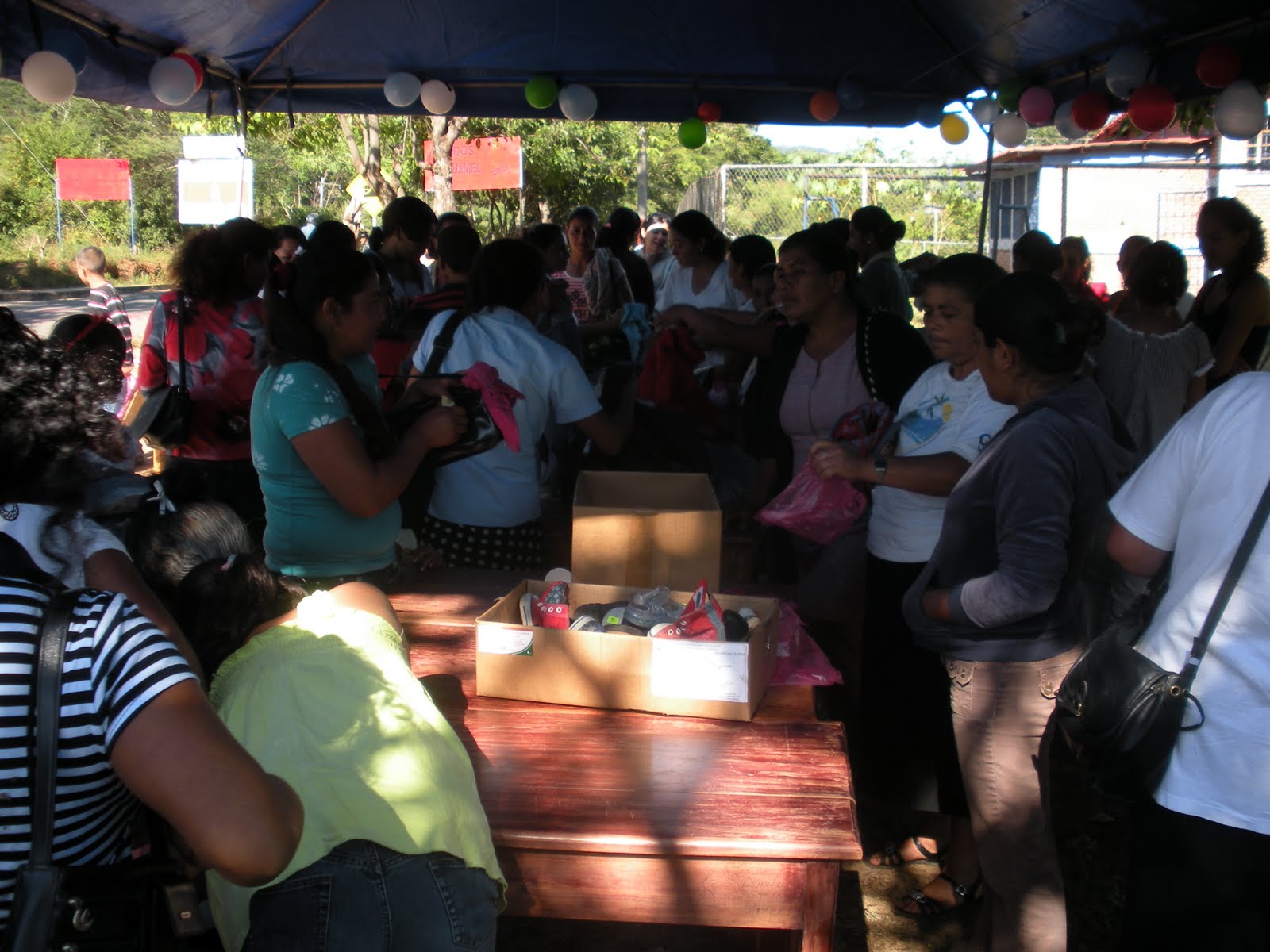
In return I bring you pictures of the yard sale and medical brigade we had last weekend to raise money for building our community-based health center!


It was a bit of a madhouse (complete with cows and dogs and all manner of creatures wandering about), but we made some good money -- enough to buy 2 beds for the house! Awesome!

Saturday, September 25, 2010

matthew and some foodstuffs

Here I am stuck in the city while we are under CONSOLIDATION MODE for DREAD HURRICANE MATTHEW which is not so much a DREAD HURRICANE as spitting rain on us. That's life I suppose. Some days you get hurricanes.

Some days you get gifted food you've never heard of and have to cook!


(Yucca, jocote, culantro, and limones. I made boiled yucca (which as far as I can tell is about the only thing acceptable to do with yucca here) and pico de gallo. SO DELICIOUS.)

Some days you make pancakes! Or "panqueques", if you prefer. Which are also delicious wherever and however you make them.


bizzareness is bizzare

The surprises never end, and they’re never the surprises you expect. Just when you think you have hit the limit for confusion for the week or maybe the month, things like this happen:

HEALTH CENTER COMPUTER: *angry screen of blinking cursor DEATH*

HEALTH CENTER STAFF: Don’t do it, computer! Come back! Don’t go toward the light! We need you so we can fill out all of these forms about everything we do here!

COMPUTER: *refuses to even turn on*

FRIENDLY NEIGHBORHOOD PEACE CORPS VOLUNTEER: Now what? We have to print more copies of this letter of commitment, and the only thing left is the ancient typewriter that attacks me every time I so much as look at it.

COUNTERPART: The alcaldía is the only place with a copier within 20km; you’ll have to go there.


(This is true. Also copies in town cost money, and the alcaldía (town office) is free. I was sold on the idea. I did not realize quite what a big deal copies are here, though.)


SECRETARY: *standing beneath a big sign that declares FOTOCOPIAS* Hello?

FNPCV: Our computer at the center died and we need copies of this letter. Can we copy it here?

SECRETARY: *looking extremely doubtful* Well...

FNPCV: Just ten or so? Please?

SECRETARY: You’ll have to talk to the alcalde.

FNPCV: The... mayor? Are you sure? All I want is...

SECRETARY: He’s that way. He’s in a meeting.

FNPCV: I... *secretary leaves* ...okay then?

ALCALDE: *is in a very important-looking meeting*

ASSISTANTS: *are looking bored in very important ways*

FNPCV: (to assistants) Look, all I want to do is copy this letter...

ASSISTANTS: You’ll have to talk to the alcalde. Go on! Just walk in!

*everyone stares, but no one stops talking*

FNPCV: Uh, hi? Sorry, I... just want to make some copies? Of this letter. For the health center?

VICE-ALCALDEZA: How many?

FNPCV: ...Ten?

VICE-ALCALDEZA: *decisively* You’ll have to bring your own paper.

FNPCV: I have to... right. Okay. Yes. I can do that. Bring my own paper. Sure thing.


So I made the copies eventually, with further help from the assistant mayor, who apparently needed to speak directly to the secretary in charge of photocopies and give specific directions. I just stepped back politely and let the whole surreal thing happen until I had exactly ten (they counted) copies of the letters, which I will be bringing back to their office next week, when I actually do need to see the mayor so he can sign off on anything the local government promises our project.

I wonder where they’ll send me for that?

Friday, August 20, 2010

burn, baby, burn

OR: HOW TO ALMOST (BUT NOT QUITE) BURN DOWN YOUR HEALTH CENTER
NOW IN FIVE EASY STEPS!

METHOD 1: COOKING

1. Get elected to make coffee for everyone working because no one believes you can cook.
2. Arrange coffee, pitcher, pot of water, and stove to your liking.
3. Spend five unnecessary minutes trying to figure out how to turn the gas on.
4. Light match. Watch helplessly as it flies out of your hand and goes arcing end over end through the air toward the tank of gas.
5. Stomp out match as quickly as possible when it lands on the floor and breathe sigh of relief. Prepare to endure teasing about this for the rest of your two years of service.

METHOD 2: WASP WARS

1. Become totally fed up with the wasps living in the cardboard boxes in the room you work in. Decide to Take Action; enlist stung coworkers for help.
2. Cover all holes in the boxes and carry them outside. Carefully lift top falps until you locate the nests. Get someone else to remove the styrofoam with the hives and put it into another, disposable box.
3. Burn the box with the hives; carry original boxes back inside after cleaning them.
4. Realize too late th at when your coworker says, "Let's get rid of the nest in the corner of the ceiling," what he really means is: "Let's tie some paper onto the end of a stick, light it on fire, and burn the wasps out." Watch in horrified fascination, convinced the ceiling tiles will catch fire and figuring out which things to grab when they do.
5. Sweep up all the debris after nothing but the nest goes up in flames. Spend the rest of the afternoon ducking dive-bombin, pissed-off wasps.

also my knuckle is the size of an jocote

Bruised Confidence in Self-Sufficiency: Washing Double-Size Sheets

First, decide your sheets are dirty enough to wash. Then analyze your pila. Is there enough water? If not, return to step one and reconsider. If they really can´t stand another day without washing, consider going to the river. Try to remember where the path to the river is and whether the river might be too full to be safe.

Set up everything you need on your little bitty concrete slab: soap, bucket, smaller bucket for scooping water. There's no place to put your sheets, so wrap them around your neck like an overgrown scarf.

Wash your pillowcase first. It´ll take you about three seconds. Feel accomplished.

Begin your first sheet. Soak it in the bucket and start soaping it. Lose track of where the ends of it are and accidently let them drag in the mud. Re-soap them a little more viciously. Scrub the sheet as much as is p ossible with lots of fabric on a little space.

Try to rinse the soap out of the sheet. This functions much like Zeno´s Paradox: no m atter how much water you use, you will only ever be able to get half the soap out. Get frustrated. Decide to hang the sheet up to dry anyway. Accidentally drop it in the dirt when you reach for your clothespins. Resist the urge to stomp on it.

Re-wash the sheet, muttering at it and deciding not to care about washing all the soap out this time.

Consider your second sheet. Return to step one. Decide it really is dirty enough after all and wash it ver slowly, because at this point your hands are protesting the harsh soap, you have at least one bruised knuckle, and your arms are definitely not in shape enough to really have at all this wet, heavy fabric.

Give your other laundry waiting to be done a long, betrayed sort of look. Wish fruitlessly that it would do itself. Finally do half of it, and celebrate with a fresh guayava.

NOTE: Keep an eye out for sudden thunderstorms. Do not get so caught up in enjoying the sound rain makes on the roof that you forget you ever did laundry until everything is soaking wet and unsalvagable.

Saturday, August 14, 2010

Dear Taxpayer

DEAR AMERICAN TAXPAYER:

Please find attached my very first Official Peace Corps Report, which sounded exciting until I sat down to actually do it, when it turned out to be excruciatingly tedious. There was a lot of frowning and squinting at scribbly numbers, I am sorry to say, because I am an impatient adder at the best of times, and when the only pieces of scrap paper I seem to have anymore measure about an inch square maximum, things get much more squishy on the handwriting front, which is never a positive thing for my math skills.

Here are some of the things you have been paying for since January:

- a Spanish dictionary, two grammar books, and a baker’s dozen of technical manuals

- enough training in Spanish that I no longer sound like a three-year-old with a serious vocabulary problem, praise to all the powers that be

- two different kinds of parasite medicine to treat one very stubborn parasite

- a lovely water Filtron to store water when there isn´t any and to filter it when it´s brown

- the opportunity to try lots of different food, mostly made of corn: fresh (corn) tortillas, elotes (corn on the cob), güigüilas (“green” corn tortillas), tamales (corn mashed, wrapped in corn husks, and boiled), nacatamales (corn tamales with meat in the middle), rosquillas (made of corn and cheese), empanadas, enchiladas... (we are in the middle of the first corn harvest. I have been given six elotes and two tamales in the last two days. I may, just perhaps, be currently experiencing a corn overdose.)

- a little less than $200 a month, which provides me with a nice little room in a house with a lovely family and a completely useless softie of a guard dog; trips into the city for internet, groceries and the occasional ice cream; and my bi-weekly splurge on peanut butter

- learning how to wash my sheets over a tiny slab of concrete and not immediately drag them in the dirt

- roughly 29082731829 awkward moments (and counting) of sudden, painful cultural understanding or head-first collisions with the language barrier

- long days sitting in the health center, navel-gazing

- long days sitting in the health center, defining a vision, goals, and objectives for a desperately needed community-based birthing center in order to apply for Peace Corps project funding (courtesy of USAID)

- snacks for a youth group of young health promoters, training to educate their peers about STDs and teen pregnancy and a whole host of other health-related topics

- the opportunity to live in a different country and experience new and exciting types of confusion every day, a fact which mostly makes me a big hit in town because everyone loves a little schadenfreude

- capacity-building for local health workers, health classes in the secondary school, and all the paper, markers, and tape that entails

So thank you, taxpayer, for everything, because even on the navel-gazing days, even on the days I can’t help but stop and wonder if anything I do is actually making any kind of difference, I’m starting to love the work you make it possible for me to do.

Cheers; here’s to twenty more months of sun and rain and good days and bad days and indifferent days, all mixed together until everything balances out.

Saturday, June 26, 2010

the grab bag

The latest story I have heard about the mysterious closure of the cyber café in town is that the key has been lost. Not sure I believe it but whatever the case, there has been no internet in my town for over a month now. Really convenient for keeping in touch! Anyway the result is you get a weirdish blog entry today full of bits and pieces of things I’ve been collecting.

So there is a problem with learning a new language. Learning a language is frustrating in itself, but then once you think you’re starting to get the hang of it you discover that the same thing has five different names. The homemade popsicle-in-a-bag everyone eats here is a posicle, a bolsita, or, if you’re up here living practically in Honduras, a charamusca. The same goes with names: your friend will introduce himself as Ramón, but no one will call him that: he goes by Moncho or Monchito, which is apparently a common nickname. I guess it is the same way in English... the eternal battle between soda vs. pop vs. soda pop vs. coke vs. who knows what else rages on. (It’s soda, by the way.)

Then of course if you want to make life really exciting, throw in a twist like one of your new friends being mute. That always complicates things fabulously. And add on top of that the fact that everyone you hang out with speaks campo Spanish, which seems to mostly involve cutting the end syllables (especially “s”s) off of words. “¡Qué barbara!” does not actually mean “What a Barbara!” but the popular saying “Qué barbaridad!”, campo-style. “This is the way everyone here speaks,” my language tutor keeps telling me, giving me an example of some construction or other. “This is wrong. Do not say this. Here is what you should actually say when you talk to anyone, or everyone will think you are a total hick.”

You can mostly forget the vocab you learned in Spanish class back home, too. According to your textbook “helado” means ice cream... here “helado” means cold, and “eskimo” means ice cream, since that’s the most popular brand of ice cream here. It’s pretty good ice cream, actually; I particularly recommend the coffee flavor, which has actual bits of coffee bean in it.

Here is something I am becoming very weary of already: meetings set up and then indefinitely postponed at the last minute for unknown reasons. Here is something I am even more tired of: meetings no one but you shows up for. Charlas scheduled in classrooms on days no one has school. It’s almost enough to make me miss the solidity of filing and data entry... almost.

People here continue to be completely bemused by the fact that we grow corn in my home state and yet never make tortillas (what else would you do with corn?), and are amused when I say I want to learn how to make them. I keep trying to get people to teach me, but it is sort of like asking people to describe how they breathe. It just is. I think I am closing in on the process mostly by watching someone make them: it seems to involving boiling the corn with “cal” (I have yet to figure out what that is) until it is mushy and submissive, and then rubbing the skins off and grinding it up to make the masa (the dough, that is).

Anyway, that´s all I have for today... I hear we have another tropical storm headed our way, so I´m expecting another solid week or so of rain... at least we had a few weeks of sun to dry out beforehand!

Saturday, May 22, 2010

water water water

So there is an old joke I have heard a few times since entering Peace Corps, and it goes like this:

An optimist looks at a glass of water and says it’s half full.
A pessimist looks at the same glass of water and says it’s half empty.
A Peace Corps Volunteer looks at the glass and says, “Huh. That’s just about enough water to take a bath in.”

It’s funny until it starts feeling true.

Now, Nicaragua is not exactly a water-starved country if you look at it on a global scale; relatively speaking it’s far above many countries Volunteers are serving in. In fact here was the view of my back patio most of this week:


(That’s my landlady cooking breakfast for her family on the outdoor wood-fire stove, by the way.)

It is the rainy season, and this week it actually decided to rain, which means the days are disgustingly hot and humid, and then sometime between one and four in the afternoon the thunderstorms roll through intermittently until the next morning. But for most of the time I’ve been here it’s been fairly dry, which means our pila that collects rainwater from the roof has been empty and we’ve been depending entirely on the town well for our water. I am not entirely sure of the hours the well keeps – it appears to me to turn on more or less randomly, usually early in the morning but sometimes in the afternoon, sometimes every day, sometimes not. But somehow everyone figures out when it’s running and everyone brings their buckets to fill up.

For my house it isn’t so bad, since we’re right in the middle of town directly across the street from the well, but for people living on the ridge above it’s pretty tough, since water is, you know, sort of heavy and they’re hauling every bit of it they need for the day (or more) up a long, steep hill. Two weeks ago, the town tried digging a new well on the ridge, which was a big production and practically everyone turned out to look on and offer suggestions and a running commentary (which my landlady had a disgruntled conversation with me about, since the main activity here is watching everyone else walk around outside, and that afternoon there was no one for her to watch), but to no avail. They tried sinking a well in two different places, both of which were dry. I am living in one of the driest parts of a country too poor for most people to even dream about indoor plumbing, and that’s when that fact really started hitting home for me.

Well, that and the fact that I was living with a family of anywhere from four to seven or eight people that had on a good day four five-gallon buckets of clean water to use. If it was just for drinking, that wouldn’t be so bad, but when our pila is empty this is the water that gets used for everything: washing dishes, cooking, bathing, washing clothes, making the charamuscas (little popsicles in bags) that the family sells in their store.

Most people here go to the river to wash clothes and bathe, but I am leery about that a little for the cleanliness factor (this is the same river cattle tromp back and forth through all day) and a lot for the environmental factor: the part of me that clings to the principles of Leave No Trace dies a little bit at all that non-biodegradable soap going into the river.

Also the river is down a terribly steep, rocky goat path, and I can just see myself carrying a heavy bucket of wet, clean clothes up, losing my footing, and rolling all the way back down again, leaving shirts and skirts in a colorful trail behind me. That’s a persuasive argument too.

So I adapted. When I treat a bowl of water with bleach to wash my vegetables with, I reuse it to wash my dishes. I wash clothes a little at a time, and I’m getting good at it – I can do a couple of days’ worth out of a two-gallon milk jug, as long as I don’t have to wash pants. I can shower out of a little over half a bucket of water. I’m not saying this to show off (well, maybe I am, just a little); it’s what I’ve had to do to adjust, to use my fair share of water here and no more.

It’s amazing, how much you start thinking about water when it doesn’t come out of a tap and laziness is no longer an option if you want to stay even mildly clean and hydrated.

Anyway, all that musing is really just to say that I am glad it is raining this week, even if it does shut down the internet café and mean that my first youth group meeting was completely rained out. The pila is full, our secondary water buckets are filling back up, and I can wash my jeans again without feeling like I’m using up a third of my family’s water for the day. They may never actually dry again, but I’m sure there’s another Peace Corps proverb somewhere to make me feel good and rugged about that too.

Wednesday, April 28, 2010

Here I am all settled into my new home, at last! It has been a whirlwind so far, with moving in and starting to cook for my very own self and the vaccination campaign that’s been going on since I arrived.

The government here is very serious about vaccinating all the kids here, as many as it can reach. We’ve been going out in teams of three or four to different rural communities and setting up shop: sometimes in a school, sometimes in a “casa base” (a little one-room health post), sometimes just on someone’s porch. We vaccinate kids all morning and into the afternoon, I give a short talk about nutrition and the importance of a balanced diet, and when it looks like everyone who’s planning on coming has come, we go through the registry we have, note which kids are missing, and then we go and find their houses. Hiking through the forest in a thunderstorm? No problem. Over a mountain in the blazing sun? We’re on it, thermos of vaccines and bag of syringes, anti-parasite tablets, and vitamin A drops in hand.

It’s been good to get out and meet my neighbors, to see the area of the world I’m living in now. It’s very mountainous here, with lots of scrubby pines and rocky soil, and the people have so far been wonderfully kind. Stop to chat with someone for a minute to ask directions, and before you know it you’ve been sat down and given a plate of fried plantains, a cup of super-sweetened coffee, and the neighborhood kids have all come over to watch you eat and ask you questions -- where are you from? did you take the bus to Nicaragua? what's it like to fly in an airplane? are you married? how old are you? -- and when you leave you’ll have fifteen new friends and probably a plantain as a parting gift... or possibly an entire bag of them.

The campaign ends this week, and I’m still working out what I’ll be doing when it does. As a community health volunteer in Nicaragua I have three main goals to work on: reduce child and maternal mortality rates, reduce the incidence of HIV/aids, and reduce the rate of teenage pregnancy (a serious problem here: it’s not terribly unusual for fifteen and sixteen year olds to have children, and I’ve met more than a few girls my age or younger who have two kids already). I’ll be working primarily as an educator – I’m hoping to start working in the school here in the “urban” center and go from there. Wish me luck!

Tuesday, April 6, 2010

Well, here we are... the last days of training! How incredible is that? The days are long here but the weeks have flown by, especially the last few. Swearing-in is at the end of this week, after which we will be honest-to-goodness bonafide Volunteers (complete with capital "V").

Last week we had mini-vacation of sorts, because of Holy Week. Nicaragua is a very Christian country (mostly Catholic), so Semana Santa is a big deal here. There´s no school all week, and Thursday through Sunda almost nothing is open. Lots of people go to the beach -- it´s the middle of summer here, and hot; perfect beach weather if you don´t mind a sunburn -- or vacation somewhere: León and Granada are both popular hot spots.

The evangelical churches here don´t do much to celebrate the occasion, but there are Catholic services every day, usually centering around processions. They start on Palm Sunday with a procession with palms and usually an "imagen" -- a statue -- of Jesus; in our town he was even mounted on a live donkey. The imagen went on a few other walks to different parts of town during the week, but the biggest deal started on Friday. All over Nicaragua people walk the "Via Cruz" in the middle of the day in the blazing sun, sometimes on their knees. That procession usually goes for a few hours, and then on Friday night there´s another procession. In my town, the imagen of Jesus was put in a glass coffin lit up -- they processed around town with it like that from about eight at night to more or less one am, accompanied by a marching band playing mournful music at top volume (because no Nicaraguan procession is complete without a marching band).

Saturday night there was a mass here for Easter Vigil, and another service on Easter Sunday itself, but they were very low-key after Friday´s excitement.

Another common thing here during Semana Santa is giving food -- we have literally a bucket of rosquillas sitting on our kitchen table which people have given us. Delicious!

There are lots of other cool things here during Semana Santa -- for example, in León they make all sorts of beautiful pictures out of sand on the streets, and when they´re finished, everyone processes over them. Maybe next year I´ll visit see it first hand.

First things first, though. Swearing-in, here I come!